Operational Excellence Seminar Journey - Tailor-made by Lean management expert Jianhong Fei for the middle and senior management of enterprises and core operational teams, integrating expert lectures, benchmarking visits and practical seminars, focusing on the main line of “from concept to practice”, in-depth deconstruction of Lean and Operational Excellence Benchmarking Cases, and assisting in the transformation and upgrading of the organization.
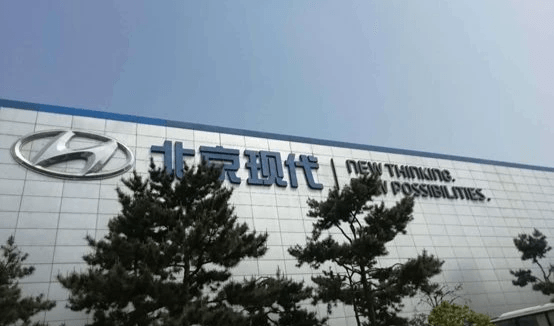
Organized by the Lean Six Sigma Committee of the Shanghai Management Science Institute, the Operational Excellence Study Tour went to the second factory of Hyundai Motor in Beijing. Swiss executives from the international famous luxury group and Chinese Operational Excellence Managers participated in the event to learn about Hyundai's development history, honors and awards, and social responsibilities, and to deeply explore its management methods and effectiveness in lean aspects, and to have a further recognition of its brand. The event was attended by the operation managers of Beijing Hyundai Motor Co.
Beijing Hyundai Motor Co., Ltd. was founded on October 18, 2002, jointly funded by Beijing Automotive Investment Co., Ltd. and Hyundai Motor Co., Ltd. with a registered capital of 2.036 billion U.S. dollars, with a 50-50 ratio between China and South Korea, and a joint venture period of 30 years. Hyundai has three vehicle production factories, three engine production factories and one technical center located in Beijing Automobile Production Base in Shunyi District of Beijing, with an annual production capacity of 1.05 million vehicles. Under the guidance of the national strategies of “Beijing-Tianjin-Hebei Cooperative Development” and “Yangtze River Economic Belt Development”, in 2015, Hyundai started the construction of Hebei Cangzhou Plant and Chongqing Plant successively. After the two new plants are put into operation, the annual production capacity of Hyundai will exceed 1.65 million vehicles.
Visitors benefited from the Lean management concepts, tools and practices that can be seen everywhere in the factory. The factory floor is bright, clean and pleasant, showing the implementation of 5S and full attention to detail. The rest area on the way to the tour is equipped with food and books for employees to take a break. Workers in the working area work very carefully and rigorously, especially in the final test drive after the car assembly, reflecting the workers' sense of responsibility and meticulous pursuit of quality.
We were also impressed by the humanistic care in the workshop. Because the workshop is semi-automated, some installations need to be done manually by the workers, such as car seats, doors and steering wheels, etc. However, during the installation process, the workers don't need to stretch their hands and hold their heads high or bend their backs, and their working positions are moderate, which fully consider the safety and convenience of the workers from the point of view of human factors engineering.
In terms of efficiency, the Hyundai factory also demonstrates the superiority of its process design. Although some work requires workers to install, each item does not take a long time. For example, when installing the doors, the rear doors are installed first, then the front doors, and when installing the front doors, the left and right sides are installed at the same time, which saves part of the time. Another point is that the factories that provide parts for Hyundai cars are located in its vicinity, so they can quickly use the latest products, which also reflects the advantage of the Hyundai factory's “zero inventory”. In addition, the factory also has a device to recycle exhaust gas to improve the environment.
After the visit, the visitors and managers also discussed how to better understand the lean production in the automotive industry, such as the requirements and standards related to “lean” and ‘standardized’ management, pointing out that the company's employees have a strong sense of service, focusing on the site and the environment, as well as the importance of “zero inventory”. It is pointed out that the company's employees have a lean culture of identifying problems, pointing out problems, perfecting defects and focusing on service consciousness, site-centeredness, teamwork, emphasis on the process, and prevention-oriented problem solving.
